The Hidden Importance of Overlooked Non-Clinical Spaces in Healthcare Facilities
By Chris Boschetto
Healthcare environments are often judged by the quality of their clinical care, but many supporting spaces play a major role in patient outcomes, staff efficiency, and overall safety. These non-clinical areas are easy to overlook because they operate behind the scenes, yet they form the backbone of daily operations. Paying attention to how these spaces are designed, maintained, and managed can greatly improve the experience of everyone who walks through a facility.
Entrances, waiting rooms, and corridors
First impressions begin at the front door. Clean, well-lit entrances and hallways help patients feel safe and ease anxiety. Waiting rooms also influence comfort and stress levels. Clear signage, comfortable seating, and uncluttered layouts support accessibility for patients with mobility challenges or sensory sensitivities. Adequate ventilation and natural light contribute to healthier indoor environments, especially for those with chronic respiratory conditions.
Corridors are more than walkways. Busy hallways should be designed to support easy movement for staff transporting equipment or patients. Thoughtful placement of storage areas can prevent crowding and reduce the risk of falls or collisions.
Storage and supply management areas
Stockrooms, linen closets, and supply cabinets can quickly become chaotic if not properly organized. Poor storage systems slow down staff and create safety hazards. Efficient layouts with clear labeling, climate control, and routine inventory checks help ensure that supplies remain accessible and sterile when needed. Streamlined storage also prevents waste by reducing expired or misplaced materials.
Environmental services and maintenance rooms
Facilities depend heavily on environmental services teams, whose work directly affects infection control. Cleaning supply rooms, waste disposal areas, and maintenance workshops should be kept orderly and hygienic. These spaces support essential work, and their condition influences how effectively staff can manage hygiene, sanitation, and equipment repairs.
Administrative and support offices
Administrative spaces may seem removed from patient care, but they influence operations behind every appointment. Scheduling teams, billing departments, and coordinators of ancillary services rely on functional, accessible workspaces. Disorganized or cramped offices can slow communication and contribute to errors. Improving these areas helps streamline workflows and enhances the overall patient journey.
Breakrooms and staff wellness areas
Healthcare professionals experience high levels of stress, so their rest spaces matter. Breakrooms should offer quiet, clean areas away from patient care zones. Access to natural light, comfortable seating, and basic amenities helps staff recharge, which ultimately improves focus and patient safety.
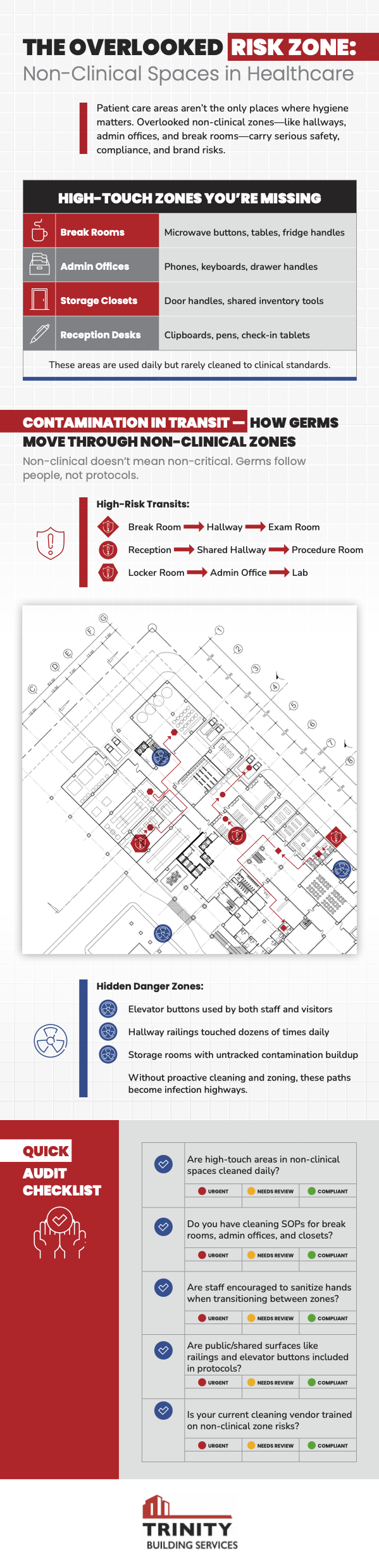
Non-clinical spaces rarely receive the same attention as exam rooms or surgical suites, but they are essential to a well-functioning healthcare environment. Improving these overlooked areas strengthens operations, enhances patient experiences, and supports the well-being of the people who deliver lifesaving care every day. Look over the accompanying resource for more information.
Chris Boschetto, President, is a second-generation owner of LEED-certified Trinity Building Services. Since 1987, Trinity has provided janitorial, specialized cleaning, and maintenance services to commercial clients throughout California.